Want to be in the loop?
subscribe to
our notification
Business News
LET PRIVATE SECTOR HELP VIETNAM€™S TRANSPORT AND LOGISTICS
Titled “Engaging the Private Sector in Transport and Logistics Planning and Policy Making: Options for Vietnam”, the report says systematic engagement with freight stakeholders by government agencies responsible for planning and policy making can boost trade competitiveness.
International experience has shown that private sector stakeholders - the end-users of transport infrastructure and key intended beneficiaries of public policies aimed at facilitating trade and reducing logistics costs - are well-positioned to inform public sector decision-making on matching supply and demand in transport and logistics, according to the report.
In Vietnam, however, private sector stakeholders remain relatively untapped as a source of insight into transport and logistics policy making and planning, the report says. “By more explicitly, transparently, and predictably engaging with private sector stakeholders all across the import-export and domestic supply chain, national agencies like the Ministry of Transport and sub-national ones like Provincial Departments of Transport can better equip Vietnam with the logistics system it needs as it enters its next phase of logistics competitiveness as a middle-income country,” said Luis C. Blancas, a World Bank Senior Transport Specialist and author of the report.
Malaysia, Thailand, the United States and the United Kingdom - among the world’s top-performing countries in transport and logistics according to the World Bank’s Logistics Performance Index benchmark - have considerable experience in engaging private sector stakeholders in planning and policy making to help public sector agencies support strong logistics outcomes. Such experience elsewhere provides lessons learned and pitfalls to avoid for Vietnam.
In the past, private sector freight stakeholders in Vietnam have worked with government agencies on efforts to facilitate trade, rather than longer-term aspects like infrastructure planning and crafting policies to promote desirable sector-wide outcomes such as better service delivery, healthier market competition and cutting greenhouse gas emissions that cause climate change.
The World Bank report contends increased public-private engagement can greatly enhance logistics competitiveness in those areas going forward. It suggests establishing legally backed platforms for public-private and public-public collaboration, and furnishing such partnerships with sufficient resources to carry out their mandate. Other important steps include managing private sector expectations, ensuring comprehensive representation of stakeholders across the supply chain, and observing common-sense “business meeting” norms regarding timeliness and the prompt issuance of minutes with clearly assigned responsibilities and well-defined next steps.
In addition, the report calls for pursuing private sector engagement opportunities throughout the planning and policy making cycle - as opposed to only within selected portions of it - as a contributing factor to ensuring sustained engagement.
A survey of Vietnam-based private sector freight stakeholders conducted for the report confirmed an unmet need for greater engagement between the government and private sector on planning and policy making in logistics. Respondents strongly supported platforms for dialogue and collaboration consistent with the approaches suggested by international experience.
Source: VCCI
Related News
MEMBER CORNER / PROMOTIONS
SENTRYSAFE CHW20201 - EFFECTIVE WATER RESISTANCE, MAXIMUM PROTECTION
In unexpected flooding situations, the most important thing is to keep your valuables dry and intact. SentrySafe CHW20201 is specially designed with superior water-resistant capabilities, helping protect documents, cash, and important belongings even when fully submerged. Proven in real testing: After water submersion, the documents inside remain dry - undamaged.
MEMBER CORNER / PROMOTIONS
AN ELECTRIFYING NIGHT WITH THE "QUEEN OF DANCE" THU MINH AT THE GRAND HO TRAM!
The stage at The Grand Ballroom is set to catch fire as Vietnam’s undisputed "Queen of Dance," Thu Minh, takes the spotlight. Renowned for her powerhouse vocals, magnetic stage presence, and sultry, high-energy performances, Thu Minh promises an evening of pure musical euphoria. The energy escalates with an exclusive appearance by special guest and The Voice champion, Vu Thao My.

HR / LABOUR/ EMPLOYMENT
HIGH-QUALITY HUMAN RESOURCES NEEDED TO ATTRACT NEW TECH INVESTMENT CAPITAL
Besides infrastructure, Việt Nam must also rapidly develop a highly skilled workforce to attract investment in AI, semiconductors and advanced manufacturing, experts have said. Don Lam, CEO and co-founder of investment management company VinaCapital, said that global technology investors were increasingly looking at the readiness of the entire ecosystem, with high-quality human resources a decisive factor.
HR / LABOUR/ EMPLOYMENT
HIRING OUTLOOK STRENGTHENS IN Q4 AS SKILLS SHORTAGES PERSIST
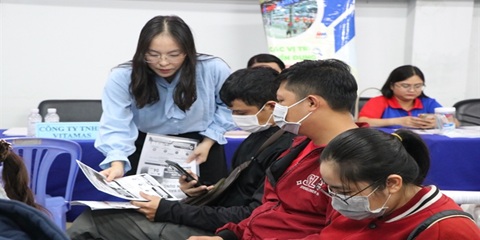
Hiring intentions among employers in Việt Nam strengthened in the fourth quarter, with 52 per cent of surveyed companies planning to increase headcount between October and December, according to a ManpowerGroup survey released this week. Việt Nam's hiring outlook was stronger than the Asia Pacific and Middle East (APME) regional average of 33 per cent and the global average of 29 per cent, ranking third in the region and 11th globally among 42 markets surveyed.
BANKING / FINANCE / INSURANCE / TAX
LARGE BANKS FORECAST TO GAIN HIGHER PROFITABILITY IN H2 2026
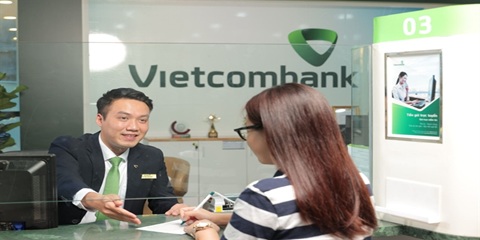
The return on average assets (ROAA) of the banking sector will likely remain stable at around 1.5 per cent in the second half of 2026, but profitability divergence among banks will increase, with large banks outperforming peers on stronger margins and diversified earnings, analysts forecast. In a recent report on the banking sector, analysts from the Vietnam Investors Service Rating said the sector’s ROAA rose by 10 basis points quarter-on-quarter to 1.51 per cent in the first half of this year, driven by net interest margin (NIM) improvements at some State-owned banks and large private banks.
GARMENT / TEXTILE
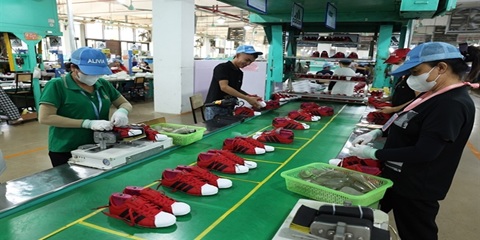
VIỆT NAM'S FOOTWEAR, BAG EXPORTS TO US TOP $8 BILLION IN EIGHT MONTHS
Việt Nam's exports of footwear and handbags to the US exceeded US$8 billion in the first eight months of 2026, as the US and EU remained the country's biggest markets despite sluggish growth in footwear shipments. Exports from Việt Nam's leather and footwear sector reached more than $2.45 billion in August, down 9 per cent from July but up 3 per cent from a year earlier, according to preliminary statistics.
Events Sponsors






















